Small Daily Habits That People with Autoimmune Disease Swear By
The Good News About Small Changes
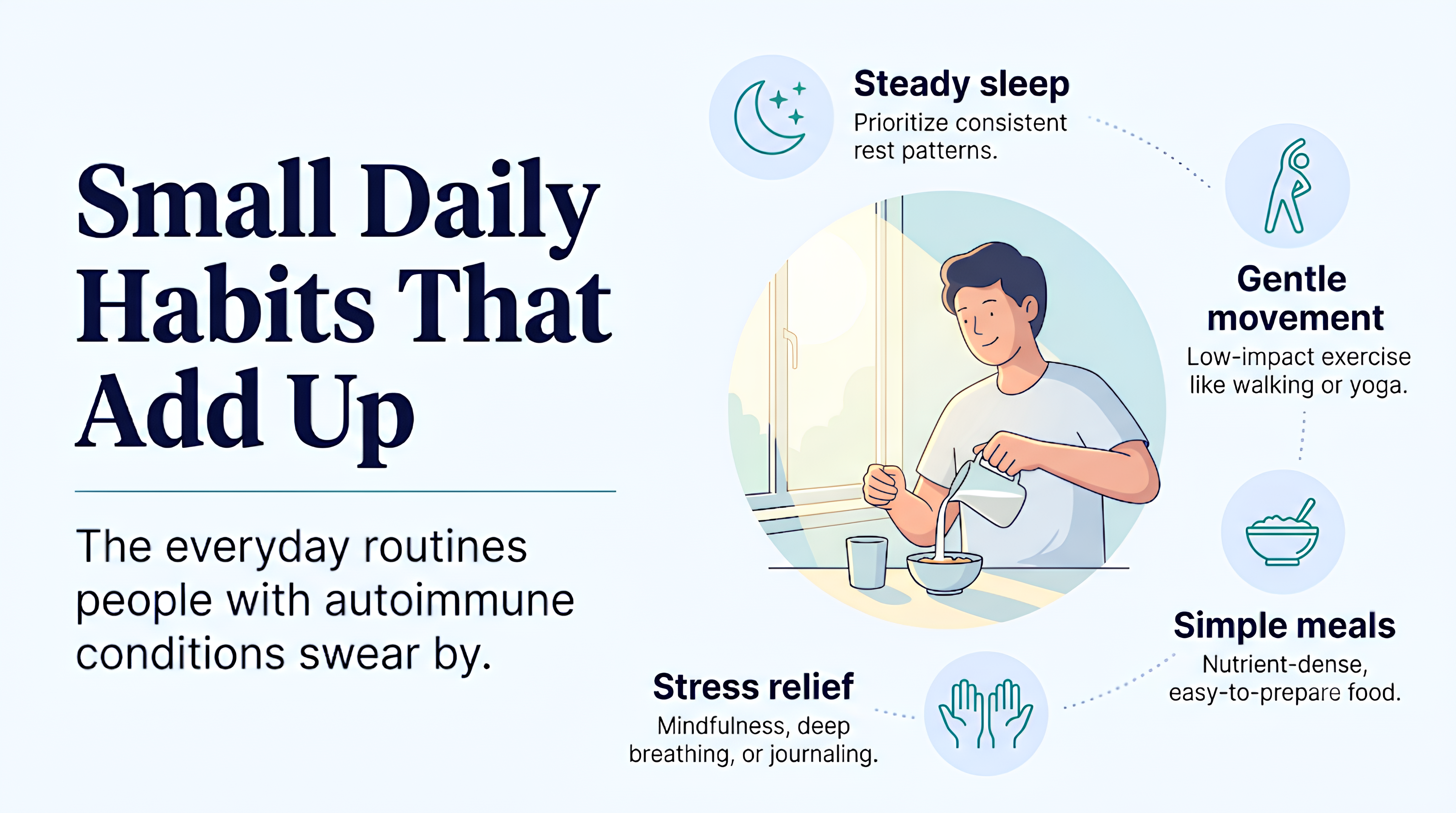
Here is something worth sitting with: you do not need to make a big change to your entire life to feel better in it. It is easy to assume that managing an autoimmune condition means a big change, a strict new diet, an intense new routine, a completely different version of yourself. But talk to enough people who feel genuinely steadier in their day to day, and a different picture shows up. It is rarely one big change. It is a handful of small, ordinary habits, repeated often enough that they start to add up.
That is the spirit behind this list. These are real autoimmune lifestyle changes that people actually stick with, not because they are dramatic, but because they are doable on an ordinary Tuesday. None of them are about fixing yourself. They are about giving your body a little more of what tends to help, consistently.
Key Takeaways
- Small, repeatable habits tend to matter more day to day than occasional big changes.
- A steady daily rhythm, sleep, movement, food, and rest, is something many people with autoimmune conditions describe as genuinely helpful.
- Pacing yourself is not giving up. It is one of the most commonly recommended strategies for steadier energy.
- Small wins are worth celebrating. Progress with an autoimmune condition is rarely a straight line, and that is completely normal.
- You are allowed to feel good about your day, even on the days your body is still figuring things out.
Why Small Habits Matter More Than One Big Change
You Don't Need to Make a Big Change to Feel Better
One of the most encouraging things people learn, often later than they wish they had, is that small, consistent habits tend to matter more than occasional big efforts. A single perfect day does not undo months of a shaky routine, and one off day does not undo weeks of steady habits either. That is genuinely good news. It means you do not need to be perfect. You just need a few things you can keep doing.
Think about the difference between trying to fix everything at once, your sleep, your meals, your stress, your movement, all in the same week, and simply choosing one small thing to try for the next few days. The first approach tends to feel exhausting before it even gets started. The second approach is the one people actually keep doing a month later, and a month later is where the real difference shows up.
Consistency Beats Intensity
Patient communities and health organizations that focus on chronic and autoimmune conditions consistently point to the same idea: gentle, sustainable habits tend to outperform intense, short-lived ones. A ten minute walk you actually take most days does more for you than an ambitious workout plan you abandon after a week.
This is not about doing less because you are limited. It is about working with your body instead of against it. Someone who walks for ten minutes almost every day for a year has moved their body far more, and far more kindly, than someone who pushes through an hour long session twice before giving up entirely. Small and steady is not a consolation prize. For many people living with an autoimmune condition, it is simply the approach that actually works.
Morning Habits People Swear By
A Gentle, Consistent Wake Time
Many people find that waking up around the same time each day, even on weekends, helps their body settle into a steadier rhythm. It sounds small, but a predictable start to the day is one of the most frequently mentioned habits among people managing autoimmune conditions.
This does not mean setting an early alarm out of obligation. It means picking a wake time that is realistic for your life and trying to keep it steady, even loosely, most days of the week. Some people pair this with a small, comforting ritual right after waking, opening the curtains, making a warm drink, or simply sitting quietly for a minute before reaching for a phone, which gives the body and mind a gentler transition into the day rather than an abrupt one.
Gentle Movement Before the Day Gets Busy
This does not mean an intense workout. Stretching, a short walk, or a few slow, deliberate movements first thing in the morning is one of the most commonly cited habits for easing stiffness and starting the day with a little more ease in the body.
For many people this looks like just a few minutes: gentle neck rolls, slow shoulder circles, or simply standing up and stretching toward the ceiling before checking a single message. Others prefer a short walk around the block or a few minutes on a yoga mat. The specific movement matters far less than the consistency of showing up for it, even in a small way, most mornings.
Daytime Habits That Support Steadier Energy
Pacing Instead of Pushing Through
Pacing means matching your activity to your actual energy that day, rather than pushing through until you crash. Many people describe this as one of the hardest habits to learn and one of the most valuable once it clicks. Breaking tasks into smaller chunks and building in rest before you feel like you need it, rather than after, is a habit worth genuinely celebrating when you manage it.
A practical version of this: instead of cleaning the whole kitchen in one go, doing the dishes now and leaving the counters for later. Instead of running every errand in a single afternoon, spreading them across two days. Many people in autoimmune communities describe their energy using the idea of a limited daily supply that needs to be spent thoughtfully, rather than something to be pushed past. Planning around that supply, instead of ignoring it, is often what makes the biggest difference to how the rest of the day feels.
Simple, Steady Nutrition
Rather than following a strict or restrictive plan, many people find it more sustainable to focus on general habits: regular meals, plenty of vegetables and whole foods, and staying attentive to how different foods make them feel over time. This is general, educational information, not an individualized nutrition plan, and any specific dietary changes are worth discussing with your own doctor or a registered dietitian.
In practice, this can be as simple as not skipping meals, keeping easy, ready-to-eat options on hand for lower energy days, and noticing patterns gently over time rather than tracking every bite. Some people keep a loose, low-pressure note of how they felt after certain meals, not to create rules, but to build a general sense of what tends to agree with them.
Hydration and a Little Sunlight
Two of the simplest habits people mention again and again: drinking water consistently through the day, and getting a few minutes of natural daylight when possible. Neither requires effort beyond remembering to do it, which is exactly why they tend to stick.
Small tricks people rely on: keeping a water bottle somewhere visible rather than tucked away, refilling it at the same points in the day, such as after each meal, and stepping outside for even five minutes during a lunch break or right after waking. None of this needs to be a production. The habit works because it is small enough to actually happen.
Evening Habits That Help Your Body Recover
A Wind-Down Routine Before Bed
A consistent, calming routine before bed, dimming the lights, stepping away from screens, doing something quiet, signals to your body that the day is winding down. People consistently describe this as one of the most helpful habits for both sleep quality and how they feel the next day.
A simple version of this might include lowering the lights an hour before bed, putting the phone in another room or on do not disturb, and doing one calm activity, reading a few pages, light stretching, or quiet music, before lying down. The specific routine matters less than doing roughly the same thing most nights, so your body starts to recognize it as a signal to relax.
Protecting Your Sleep Like It Matters, Because It Does
Sleep is one of the most frequently mentioned factors in how people with autoimmune conditions describe their day to day. A consistent bedtime, a cool and quiet room, and giving yourself permission to actually rest are small habits with a genuinely outsized impact.
This can mean small, practical changes: keeping the bedroom a little cooler, using a fan or white noise if the environment is not fully quiet, and treating a full night of rest as something you are allowed to protect, not something to feel guilty about. Many people find it helpful to set a gentle bedtime reminder, the same way they might set an alarm to wake up, as a small nudge to actually start winding down.
Habits That Support Your Mind, Not Just Your Body
Staying Connected to Community
Talking with other people who understand what you are living with, whether that is a friend, a family member, or a community built around your condition, is consistently described as one of the most meaningful daily or weekly habits people maintain. You are not meant to carry this alone, and you do not have to.
For some people this looks like a quick daily check-in with a friend who understands what they are dealing with. For others it is a weekly conversation in an online community, or simply reading how someone else described their week and realizing it sounds a lot like their own. The format matters less than the habit of staying connected, on purpose, even briefly, rather than letting the condition quietly become something you carry in isolation.
If you want to see what that connection looks like in practice, our Community is a good place to find it .
Tracking Patterns Without Obsessing Over Them
A quick daily note about how you are feeling, what you ate, how you slept, can help you notice patterns over time. The goal is gentle awareness, not constant monitoring. A simple note is enough. This is meant to support conversations with your doctor, not replace them.
A single line in a notes app is plenty: how your energy felt, whether anything unusual came up, and roughly how you slept. Over a few weeks, small patterns tend to become visible that would be nearly impossible to remember otherwise, and that is genuinely useful information to bring to your next appointment, without turning daily life into a spreadsheet.
| Habit | Why People Swear By It |
|---|---|
| Consistent wake and sleep times | Supports a steadier daily rhythm and more predictable energy |
| Gentle morning movement | Frequently reported to ease stiffness and start the day with more ease |
| Pacing activities across the day | Helps avoid the push-and-crash cycle many people describe |
| Regular meals with whole foods | Supports steady energy without requiring a restrictive plan |
| A calming wind-down routine at night | Consistently linked to better sleep quality and next-day energy |
| Staying connected to community | Eases the isolation that often comes with a chronic condition |
Small Steps, Real Progress
If you take one thing from this guide, let it be this: you are allowed to feel good about the small things. A short walk, a full glass of water, a consistent bedtime, none of it needs to be dramatic to genuinely count. Progress with an autoimmune condition rarely looks like a straight line upward, and that is completely normal. It looks like small, steady habits, repeated on the days you can manage them, and grace for yourself on the days you cannot.
You do not have to figure this out by yourself. AutoimmuneClarity's community is full of people managing autoimmune disease naturally, sharing the small habits that actually worked for them, and specialists who can offer general guidance along the way. If you would like to hear what has genuinely helped other people, our Community is a good place to start. You can also browse our library of guides for more structured, condition-specific ideas.
Note : This content is for educational and informational purposes only. It is not a substitute for professional medical advice, diagnosis, or treatment. Always consult your physician regarding any medical concerns or before making changes to your care plan, including changes to diet, exercise, or sleep habits. If you are experiencing a medical emergency, call your local emergency number or go to the nearest emergency room.


